

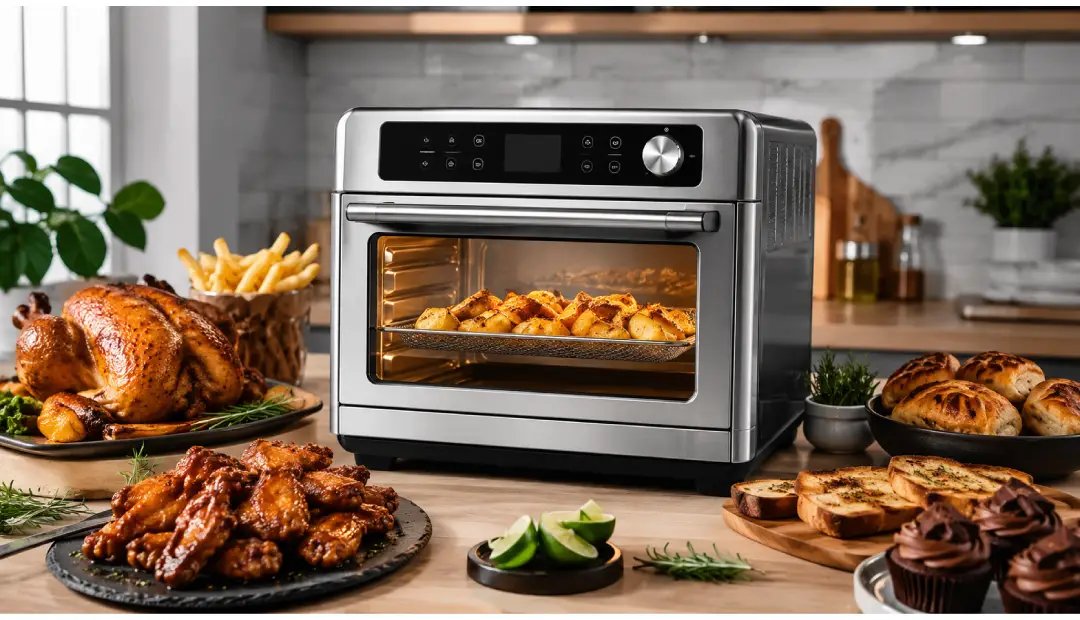
You already know you want fewer appliances cluttering your counter. The real question is whether a microwave air fryer combo can actually deliver crispy food or if it just reheats leftovers with extra steps.
The short answer: the right model does both well. The wrong one leaves you with soggy chicken wings and no counter space saved.
What Is a Microwave Air Fryer Combo?
A microwave air fryer combo is a multi-functional kitchen appliance that combines microwave heating, convection cooking, and air frying in one unit. It is designed for fast cooking and crispy results without needing three separate countertop appliances.
Most microwave air fryer models include multiple cooking modes: standard microwave, air fry, convection bake, and broil. A convection microwave combines the speed of a traditional microwave with a fan that circulates heat evenly around food. Some models also include a sensor-cook feature that reads humidity levels inside the cavity and automatically adjusts time and power.
The air fry function works by circulating hot air at high speed around the food. This produces a crispy outer layer, similar to deep-frying, but without the oil.
How a Microwave Air Fryer Combo Works
The microwave side uses electromagnetic energy to heat food quickly from the inside. The air fryer uses a convection fan to push hot air around the food at high temperatures.
These two systems share the same cooking system inside the unit. When you switch between the microwave and air fry settings, the appliance adjusts which heating element and fan it uses.
Some models offer microwave-air-fry convection modes that combine both systems for faster, more even results. This is where combo units start to outperform a basic microwave significantly.
Microwave Air Fryer vs. Dedicated Air Fryer
A dedicated air fryer typically outperforms a microwave air fryer in terms of crispiness. High-quality air fryers require strong fans and a specialized basket to achieve crispiness without excess oil, and standalone units are built specifically for that task.
A microwave air fryer combo trades some air frying power for convenience. You get reheating, defrosting, convection baking, and air frying from one appliance. For most households, that trade-off makes total sense.
While microwave air fryer combos can replace a microwave and reduce the need for multiple appliances, they generally do not match the crisping power or capacity of dedicated air fryers. Keep that in mind if crispy texture is your main priority.
 Who Should Buy a Microwave Air Fryer Combo?
 Who Should Buy a Microwave Air Fryer Combo?
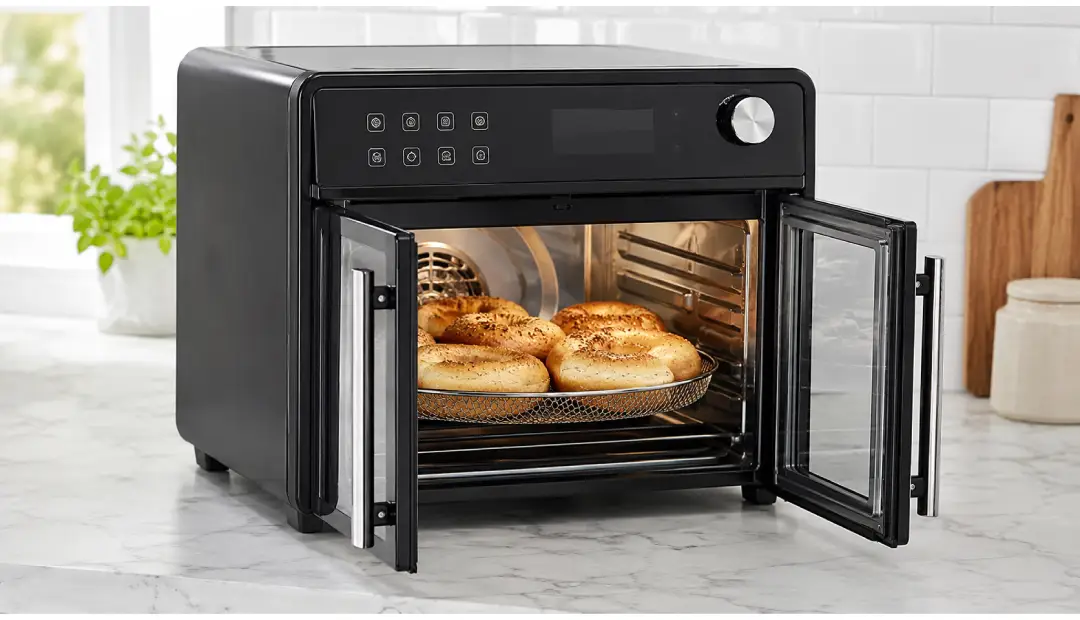
Small households and those with limited kitchen space will benefit most from an air fryer microwave combo. If you cook for one or two people and want fewer appliances, a microwave air fryer covers most daily tasks.
Larger families who regularly batch-cook may find the capacity limiting. Standard models range from 1.5 to 2.2 cubic feet, and family-sized meals typically need 1.5 cu. ft. or more. Smaller households or studio apartments can manage well with 1.0 to 1.2 cu. ft.
How We Tested Microwave Air Fryer Combos
We ran each microwave air fryer through a series of real cooking tasks. These included air-frying chicken wings, reheating leftovers, baking potatoes, and convection-baking a simple cake.
We evaluated heat distribution, control panel usability, and how evenly each air fryer microwave combo browned food. We also checked noise levels, interior size, and ease of cleaning.
Our heat distribution tests evaluated whether the air fry settings produced even heating across the entire cooking cavity. We also ran the microwave’s defrost preset and frozen food preset on each model to check for cold spots.
Best Microwave Air Fryer Combo Models for You
1. Panasonic HomeChef
Capacity: 1.2 Cubic Feet
Wattage:1480 watts
Cooking modes: Microwave, air fry, convection oven, broil
The Panasonic HomeChef tops our list for its balance of performance and everyday usability.
This air fryer microwave combo combines microwave, broiler, convection oven, and air fryer functions in one compact unit. It comes with an app featuring 20 presets and includes a Magic Pot cookware set for added cooking versatility.
- The air fry function produced golden, crisp chicken wings after a single cooking cycle, with no oil needed.
- Our convection setting produced evenly browned toast slices and a very moist cake during testing.
- The sensor cook feature uses smart sensors to automatically adjust time and power, making reheating leftovers much simpler.
- A backlit digital control panel makes selecting air fry settings and switching between cooking modes fast and clear.
- Comes with an oven rack, grill rack, and steam tray for added versatility right out of the box.

Panasonic · Inverter Microwave Oven
Panasonic NN-SN686S Microwave Oven
Inverter technology delivers steady power for even cooking – no hot edges, no cold centers.
Families who want a smart, even-heating microwave for daily cooking and defrosting.
The main trade-off is capacity. At 1.2 cubic feet, this microwave air fryer combo fits a standard dinner plate but not a large roasting pan.
Best for: Anyone who wants one appliance to replace their microwave and dedicated air fryer in a small or medium kitchen.
2. Toshiba Microwave
Capacity: 1.2 Cubic Feet
Wattage: 1000 watts
Cooking modes: Microwave, air fry, convection, broil, plus three more
The Toshiba offers seven cooking methods, including microwave, air fry, convection, and broil. It is one of the few air fryer microwave models in this price range with this many separate cooking settings.
Our heat distribution tests showed even results across the full cooking cavity. Reheating leftovers was consistent across runs, with melting cheese evenly across a full dinner plate and no cold spots detected.
- Multiple cooking modes let you switch between microwave, air fry, and convection settings without navigating complicated menus.
- The air fry basket attaches securely, is easy to remove, and cleans quickly after air frying chicken wings or other fatty foods.
- Convection cooking produced air-fried chicken wings with a crispy exterior in less time than the other models in our test.
- The auto-adjust feature uses built-in humidity sensors to track steam output and reduce time and heat when food is nearly done.
- A rotating ring underneath the tray ensures consistent heat distribution across different foods and plate sizes.

Toshiba · Smart Sensor Microwave Oven
Toshiba EM131A5C-BS Microwave Oven
Smart humidity sensor adjusts time and power automatically – no overcooked or cold food.
Families who want a quiet, smart microwave for everyday reheating and defrosting.
One limitation: the control panel has more buttons than most users will use day to day. Some air fry settings are buried in sub-menus, which adds a few steps for less common cooking functions.
Best for: Households that cook a wide variety of foods and want multiple cooking functions without buying separate appliances.
3. GE 30-Inch Over-the-Range Convection Microwave
Capacity:1.6 Cubic Feet
Wattage:1000 watts
Cooking modes: Air fry, convection, microwave, sensor cook
This GE convection microwave is the only over-the-range option on our list. It combines air frying, convection cooking, and microwave functionality above the stovetop, saving full counter space.
The GE model features a built-in ventilation hood that handles smoke and odors from the cooking surface below. For over-the-range microwave air fryer combos, ensure a venting capacity of 300-400 CFM to clear smoke and odors from the kitchen.
- The 1.6 Cubic Feet interior fits large dinner plates and accommodates most family-sized dishes without issue.
- Cooking controls monitor cavity humidity and automatically adjust time and power to achieve consistent results across different foods.
- The air fry function circulates hot air evenly, producing snacks that are perfectly crisp in our tests without any added oil.
- Multiple cooking modes include a frozen food preset for quick air frying straight from frozen and a standard microwave setting for fast reheating.
- Most over-the-range microwave air fryer combos require at least 30 inches of clearance above the cooking surface for safe installation.

GE · Over-the-Range Microwave Oven
GE 30″ Over-the-Range Microwave
Saves counter space by mounting above the range – 300 CFM hood vent removes smoke and odors while you cook.
Homeowners who want to free up counter space with a built-in microwave and hood vent combo.
Installation of this GE microwave air fryer model typically requires professional help due to electrical and ventilation connections. Plan for installation time and cost before purchasing.
Best for: Home cooks with a dedicated kitchen space who want to save full counter space while keeping air-frying and convection-baking capabilities.
4. Breville Combi Wave 3-in-1
Capacity: 1.1 cu. ft.
Wattage: 1,100W
Cooking modes: Microwave, air fry, convection oven
The Breville Combi Wave is a fully stainless-steel model with a sleek exterior that looks more like a premium countertop oven than a standard microwave air fryer. It stands out for its build quality and cooking performance.
This air fryer microwave combo delivers strong air-frying power at 1,100 watts, exceeding the minimum recommended for genuinely crispy results. The air fryer setting typically circulates hot air at high speed to cook food evenly from all sides.
- The convection oven, combined with the air fry setting, produced perfectly cooked baked potatoes and golden chicken wings in our tests.
- Recipes developed specifically for this model are available directly through Breville’s website and app ecosystem.
- The stainless steel lid and smooth interior are easy to wipe clean after each cooking cycle, midway, or at the end of air frying.
- The backlit digital control panel clearly groups air fry settings and other modes, with no buried sub-menus.
- Inverter technology provides a constant, even stream of energy, preventing rubbery food during microwave reheating.
The capacity is smaller than the GE and Toshiba models. If you cook for more than two people regularly, the 1.1 cu. ft. interior may feel restrictive for larger meals.
Best for: Anyone who wants premium build quality and strong air-frying power, and who is willing to pay more for a high-performance air fryer microwave combo.
Comparison Table: Microwave Air Fryer Combos at a Glance
| Model | Capacity | Wattage | Air Fry | Sensor Cook | Type | Best For |
|---|---|---|---|---|---|---|
| Panasonic HomeChef 4-in-1 | 1.2 cu. ft. | 1,000W | Yes | Yes | Countertop | Overall value |
| Toshiba 7-in-1 | 1.5 cu. ft. | 1,000W | Yes | Yes | Countertop | Versatility |
| GE 30-Inch | 1.7 cu. ft. | 950W | Yes | Yes | Over-the-range | Large kitchens |
| Breville Combi Wave 3-in-1 | 1.1 cu. ft. | 1,100W | Yes | No | Countertop | Premium quality |
How to Choose the Best Microwave Air Fryer Combo
 How to Choose the Best Microwave Air Fryer Combo
1.Capacity and Interior Size
- The internal size of a microwave air fryer is measured in cubic feet. Most combo units range from 0.8 to 2.2 cubic feet, with the most popular models landing around 1.2 cubic feet.
- Smaller households and studio apartments can manage with 1.0 to 1.2 cu. ft. without issue. Family-sized meals require 1.5 cu. ft. or larger to cook comfortably. Larger built-in combinations can reach over 6 cubic feet for total capacity if you need it.
2.Wattage for Air Frying and Microwave Use
- Standard microwave heating typically requires 800 to 1,200 watts. Look for at least 1,200 watts for the air fry function to ensure genuinely crispy results.
- Most microwave air fryer combos have higher wattage than traditional microwaves. This is necessary because air frying requires more energy to circulate hot air at high speed for extra-crispy cooking.
3.Cooking Functions to Look For
- Look for a microwave air fryer that includes these core cooking functions: microwave, air fry, convection bake, and broil. Pre-programmed settings for air frying popular foods like chicken wings or frozen snacks make meal preparation faster and easier. These presets let you heat foods consistently without adjusting time and power manually each time.
- Many microwave air fryers also include a frozen ground beef defrost mode, a microwave’s defrost preset, and a frozen food preset for quick everyday use. These multiple cooking functions add value beyond simple air frying.
- Cooking versatility includes traditional microwaving, air frying, convection baking and roasting, and broiling. The more cooking modes a unit offers, the more it can replace separate appliances on your counter. Look for at least two convection settings, one for standard convection baking and one for higher-heat air frying, to get the most from a single unit.
4.Sensor Cook Technology
- A sensor cook feature uses built-in humidity sensors to automatically adjust cooking time and power. This reduces guesswork and produces consistent results when reheating leftovers or cooking different portion sizes.
- Look for models with smart sensors that automatically adjust during the cooking cycle. Basic models tend to rely solely on manual time and power inputs, which requires more hands-on attention.
5.Control Panel Design
- The control panel design affects how quickly you can access air fry settings and switch between modes. A clearly labeled control panel with lit buttons is easier to use daily than a dial-only interface.
- Check whether the model offers separate settings for each cooking mode or groups them under a single menu. Fewer cooking settings up front usually means a simpler, faster experience for common tasks.
6.Ease of Cleaning
- Many microwave air fryers require more cleaning than standard microwaves because grease and fat from air frying accumulate in the cavity. Choose a model with a smooth interior and a removable air fry basket for easier maintenance.
- Avoid units with too many internal crevices. Grease builds up in corners quickly after cooking chicken wings or other fatty foods, and hard-to-reach spots make cleaning a bigger chore over time. Remove the air fry basket and oven rack after each use and wash them separately for best results. An alternative storage solution for the accessories also helps keep the kitchen organized.
7.Type: Countertop, Over-the-Range, or Built-In
- Countertop microwave air fryer combos are the most common. They sit on the counter and require no installation.
- Over-the-range models mount above the stove. They save full counter space but require professional installation in most cases. Proper ventilation is essential for over-the-range microwave air fryer combos, and models typically feature a three-speed venting system to effectively remove smoke and odors from the kitchen.
- When installing an over-the-range microwave air fryer combo, make sure the mounting hardware is compatible with your wall type, whether drywall, tile, or another surface. Built-in models are installed inside cabinetry and offer the most integrated kitchen look, but are also the most expensive option.
What Are The Pros and Cons of Microwave Air Fryer Combos
 What Are The Pros and Cons of Microwave Air Fryer Combos
Pros
- Space-saving design. A microwave air fryer combo replaces two or more appliances. This is ideal for small kitchens or anyone looking to cook food quickly without cluttering the counter with separate units.
- Multiple cooking modes. You get microwave speed, convection oven results, and air fry crispiness from one appliance. Some models add broiling and steaming, making them a true multi-functional kitchen appliance for everyday use.
- Healthier cooking. Air frying in a combo unit produces crispy fried foods without oil. This makes a real difference for everyday meals.
- Sensor cook convenience. Many microwave air fryers include a sensor cook feature that uses built-in humidity sensors to automatically adjust cooking time and power. This means fewer burned or undercooked meals with no manual guesswork involved.
Cons
- Lower crisping performance than a dedicated air fryer. The main disadvantages of microwave air fryer combos include lower crisping performance compared to standalone air fryers. While they do air fry well, they do not fully match the output of a basket-style dedicated air fryer with a stronger fan.
- Smaller cooking capacity for larger families. Combo units are sized to fit in a microwave footprint. This limits the amount of food you can air-fry in a single batch, which can slow meal preparation for households of 3 or more people.
- Longer warm-up times for some tasks. Microwave air fryers tend to take longer to reach peak air frying temperatures than standalone units. This is because the same cooking system must balance multiple modes within a single shared interior.
Installation Requirements for Over-the-Range Models
Over-the-range microwave air fryer combos have specific installation needs. Most over-the-range microwave air fryer combos require at least 30 inches of clearance above the cooking surface for safe installation and proper function.
Ventilation is critical for safe operation. For over-the-range models, ensure a venting capacity of at least 300 to 400 CFM to effectively clear smoke and odors. Models typically feature a three-speed venting system to handle different cooking intensities.
When installing an over-the-range microwave air fryer combo, it is important to ensure that the mounting hardware is compatible with the wall type, whether drywall, tile, or another surface. Installation often requires professional help because it requires electrical and ventilation connections, though some models can be installed by handy users with the right tools.

