

TL;DR
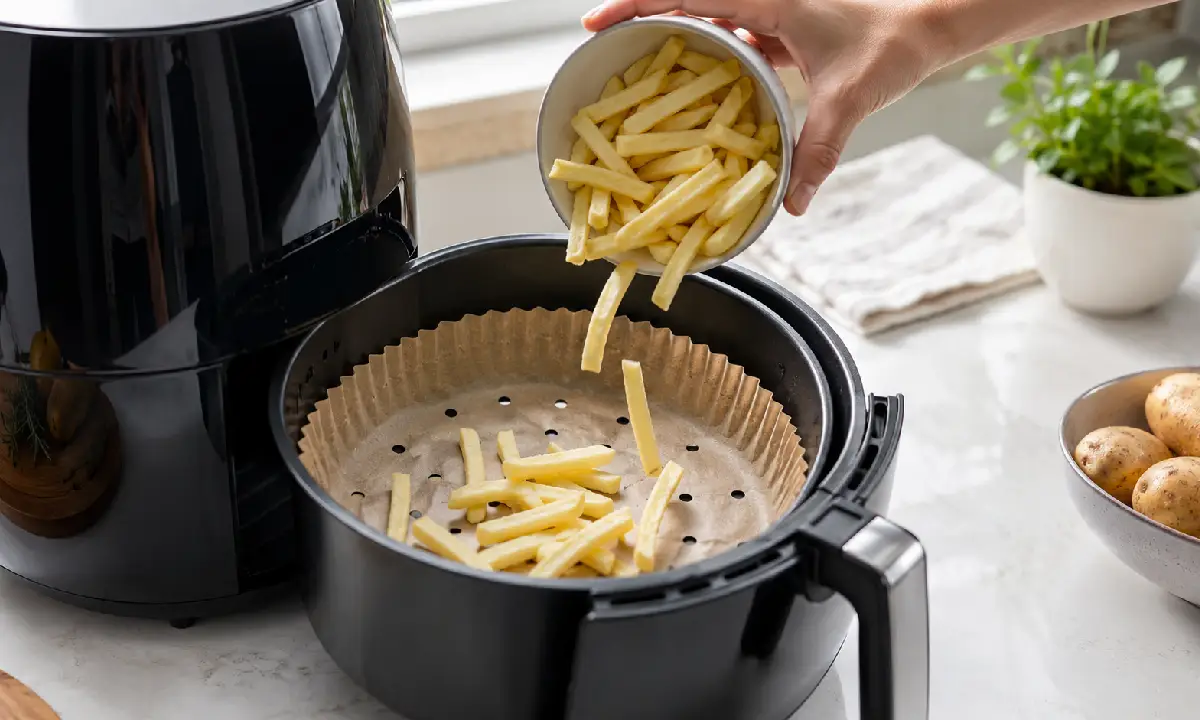
- Use air fryer liners only when they fit the basket and stay under food.
- Never preheat an air fryer with an empty paper liner inside.
- Choose perforated liners for crispy foods and bowl-shaped liners for messy foods.
- Keep every liner away from the heating element and fan area.
- Stop cooking if the liner curls, smokes, burns, or moves inside the basket.
[Published: July 18, 2026 | Last updated: July 18, 2026]
Direct Answer
To use air fryer liners safely, place the liner flat in the basket, add food on top, and start cooking only after the liner is weighed down. Do not preheat with an empty liner inside. The fan can lift loose paper toward the heating element, which may cause smoke or fire.
What Are Air Fryer Liners?
Air fryer liners are thin inserts placed inside an air fryer basket or tray to reduce sticking and catch food mess. They are usually made from parchment paper or silicone.
Paper liners are often single-use. Silicone liners are reusable and must be washed after cooking.
Air fryer liners can help with:
- Grease from chicken wings.
- Crumbs from breaded snacks.
- Melted cheese from reheated food.
- Sticky sauce from marinated meat.
- Delicate food that may break apart.
- Easier cleanup after oily meals.
A liner should support cooking. It should not block the airflow that makes an air fryer work.
Which Type of Air Fryer Liner Should You Use?
Use perforated parchment liners for crisp food, bowl-shaped paper liners for messy food, and silicone liners for repeated use. The right liner depends on your basket shape and the food you cook most.
| Liner type | Best for | Main benefit | Main caution |
|---|---|---|---|
| Perforated parchment liner | Fries, nuggets, vegetables, fish sticks | Better airflow through the holes | Still needs food on top |
| Bowl-shaped paper liner | Wings, saucy food, melted cheese | Catches grease and crumbs | May reduce crispiness |
| Silicone liner | Reheating, snacks, simple meals | Reusable and easy to wash | Must fit well and allow airflow |
| Flat parchment sheet | Cookies, fish, small baked foods | Simple surface for delicate food | Loose corners can lift |
| Bare basket | Fries, wings, roasted vegetables | Best airflow and browning | More cleanup needed |
For most air fryer users, perforated parchment liners are the safest first choice for crispy food. Bowl-shaped liners work better for sauce, grease, and crumbs.
Step-by-Step: How to Use Air Fryer Liners
Use air fryer liners by matching the liner to your basket, adding it after preheating, placing food on top, and checking that it stays flat. This process helps prevent smoke, curling, and blocked airflow.
Step 1: Measure Your Air Fryer Basket
Measure the inside base of your air fryer basket before buying liners. A liner that is too big may fold upward, and a liner that is too small may not cover enough space.
For a square basket, measure the inside length and width.
For a round basket, measure the inside diameter.
Do not rely only on quart size. A 5-quart air fryer from one brand may have a different basket shape than a 5-quart model from another brand.
Step 2: Choose the Right Shape
Choose a liner that matches your basket shape. Use square liners for square baskets, round liners for round baskets, and rectangular liners for air fryer oven trays.
The liner should sit flat. It should not climb high up the basket wall.
If the paper folds, curls, or reaches near the top heating area, use a smaller liner.
Step 3: Preheat Without the Liner
Preheat the air fryer without the liner inside. Empty paper liners can lift when the fan starts.
If your recipe needs preheating, run the preheat cycle first. Then open the basket, place the liner inside, add food, and start cooking.
Do not leave paper liners sitting alone in a hot air fryer.
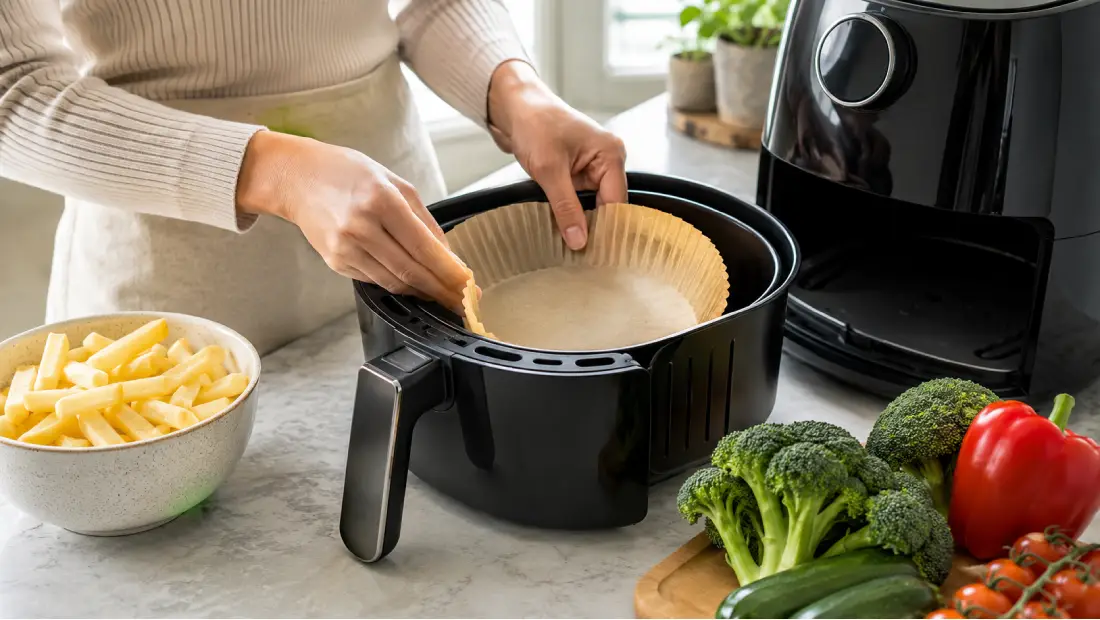
Step 4: Place the Liner Flat in the Basket
Place the liner flat on the bottom of the basket or tray. Smooth out any folds before adding food.
For bowl-shaped liners, press the bottom down gently so it sits flat. For perforated liners, line up the paper with the basket base.
Do not cover side vents or block too much open space.
Step 5: Add Food on Top
Add food right after placing the liner in the basket. The food holds the liner down so the fan cannot lift it.
Cover enough of the liner to keep it stable. This matters more with light foods like chips, thin vegetables, toast, or small snacks.
If you are cooking a very small portion, skip the paper liner or use a silicone liner that sits heavier in the basket.
Step 6: Leave Space Between Food Pieces
Leave space between food pieces so hot air can move around the basket. Crowded food may cook slowly, turn soggy, or brown unevenly.
Air fryers cook by moving hot air around food. If the liner and the food block that air, the food may not crisp well.
For fries, nuggets, and vegetables, spread food in a single layer when possible.
Step 7: Check the Liner During Cooking
Check the liner the first time you use a new size or type. Stop cooking if the liner curls upward, moves around, smokes, or turns dark.
This quick check helps you see how the liner works with your air fryer model.
If the liner keeps moving, change the liner size or switch to a silicone liner.
Step 8: Remove the Liner After Cooking
Remove the liner after the basket cools for a short time. Used liners may hold hot oil, sauce, or melted cheese.
Lift slowly so grease does not spill.
Throw away paper liners after use. Do not reuse a liner that is oily, wet, torn, dark, or covered with food residue.
Dos and Don’ts for Air Fryer Liners
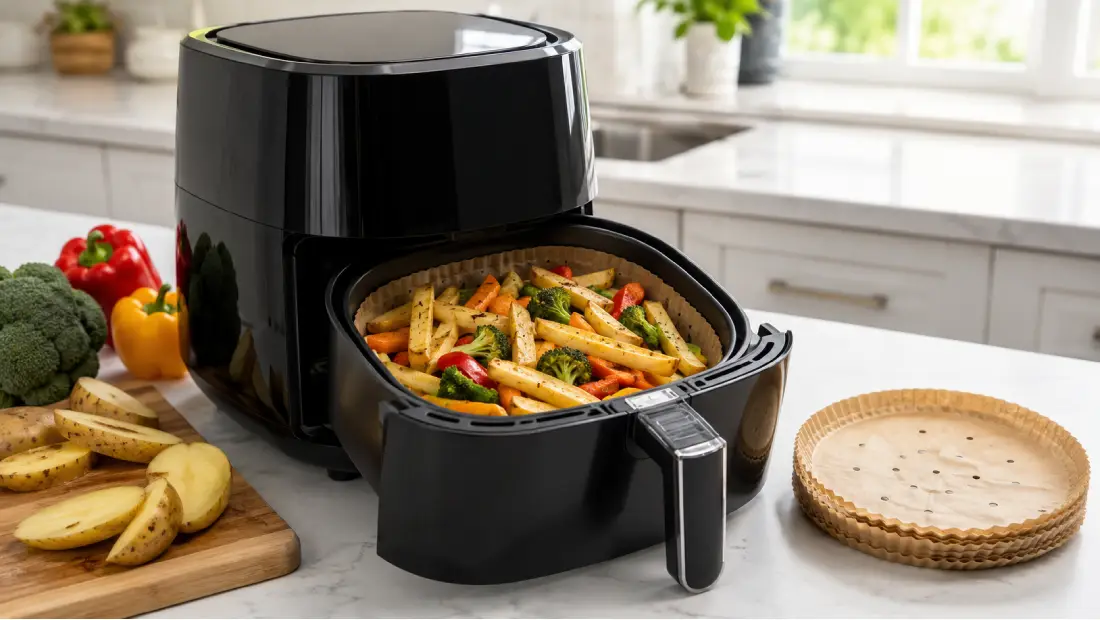
Use liners only when they fit well and stay under food. Do not use liners in a way that lets paper move near the heating element.
| Do | Don’t |
|---|---|
| Add food on top of the liner before cooking. | Do not preheat with an empty liner. |
| Use the correct liner size. | Do not use oversized paper. |
| Choose perforated liners for crisp food. | Do not block all airflow holes. |
| Use bowl-shaped liners for messy food. | Do not let grease pool too high. |
| Keep liners away from the heating element. | Do not let paper edges curl upward. |
| Check the first cook with a new liner. | Do not ignore smoke or burnt smell. |
| Follow the air fryer manual. | Do not use wax paper or paper towel as a liner. |
Air Fryer Liner Safety Checklist
Use this checklist before cooking with any liner. If one answer is no, change the liner or cook without it.
| Safety check | Safe answer |
|---|---|
| Does the liner fit the basket? | Yes |
| Is the liner made for cooking heat? | Yes |
| Is the liner flat? | Yes |
| Is food holding it down? | Yes |
| Is it away from the heating element? | Yes |
| Is airflow still open? | Yes |
| Is the liner free from wax or plastic coating? | Yes |
| Does your manual allow liners? | Yes |
A loose liner is the main risk. Heat is not the only issue. The fan can move light paper during cooking.
Do Air Fryer Liners Make Food Less Crispy?
Air fryer liners can make food less crispy when they block airflow under the food. Solid paper liners and deep bowl-shaped liners affect bottom crisping more than perforated liners.
To keep food crispy:
- Use perforated liners for fries and breaded snacks.
- Keep food in a single layer.
- Shake the basket halfway through cooking.
- Flip larger foods once.
- Use less sauce at the start.
- Avoid too much oil.
- Cook directly in the basket when crispiness matters most.
For maximum crunch, the bare basket is usually best.
When Should You Use Air Fryer Liners?
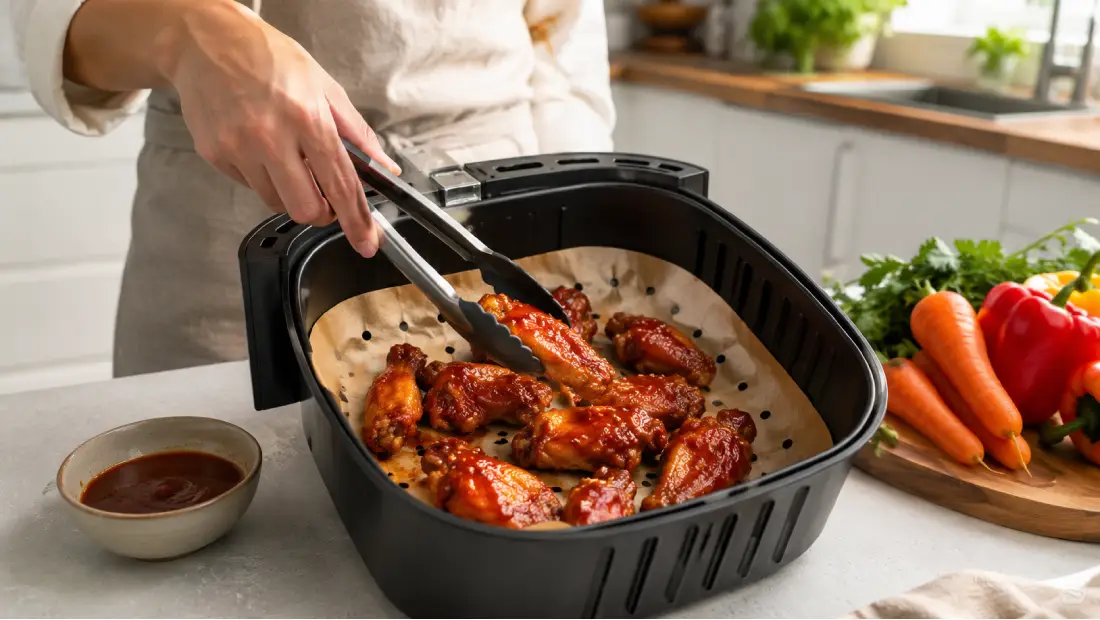
Use air fryer liners for sticky, saucy, greasy, or crumbly foods. They are most useful when cleanup is harder than usual.
Good foods for liners:
- Chicken wings.
- Marinated chicken.
- Fish fillets.
- Breaded nuggets.
- Mozzarella sticks.
- Vegetables with seasoning.
- Reheated pizza.
- Cheese-covered snacks.
- Small baked foods.
- Sticky glazed foods.
Skip the liner for foods that need strong bottom airflow, such as fries, wings, and breaded snacks, unless you use a perforated liner.
What Should You Not Use as an Air Fryer Liner?
Do not use paper towel, wax paper, plastic wrap, thin napkins, cardboard, or oversized loose foil as air fryer liners. These materials can burn, melt, move, smoke, or block airflow.
| Unsafe item | Why to avoid it |
|---|---|
| Paper towel | Can lift, smoke, or burn |
| Wax paper | Wax can melt |
| Plastic wrap | Can melt and stick |
| Thin napkins | Can fly into the heating element |
| Cardboard | Can burn |
| Oversized parchment | Can curl near heat |
| Loose foil | Can block airflow or move |
| Unknown baking paper | May not be heat-safe |
| Damaged silicone liner | May hold residue or tear |
Use only liners made for cooking heat and sized for your appliance.
Can You Use Air Fryer Liners in an Air Fryer Oven?
Yes, you can use air fryer liners in an air fryer oven if the liner sits on a tray or pan and food holds it down. Do not place loose paper on an open rack where the fan can move it.
Air fryer ovens have more open space than basket models. Loose paper can shift more easily.
Safe air fryer oven tips:
- Place parchment on a tray, not loose on a rack.
- Keep paper away from top heating elements.
- Do not use paper liners on broil mode.
- Do not let paper hang over tray edges.
- Use a pan for wet foods.
- Watch the first few minutes.
Check your manual before using liners in an oven-style air fryer.
Can You Use Liners With Greasy Foods?
You can use liners with greasy foods, but you need to watch for smoke and grease pooling. Bacon, sausage, burgers, and wings can release a lot of fat.
A deep paper liner may hold grease instead of letting it drip away. Too much pooled grease can smoke and soften food.
For greasy foods:
- Cook smaller batches.
- Keep food in a single layer.
- Use the crisper plate if possible.
- Check for smoke.
- Drain grease only if your manual allows it.
- Clean the basket after cooking.
- Use the bare basket when crispness matters.
For bacon, the bare basket or crisper tray often works better than a paper liner.
Can You Use Liners With Wet Batter?
Do not use a loose air fryer liner with wet batter. Wet batter can drip, spread, and block airflow before it sets.
Air fryers do not work like deep fryers. There is no hot oil to seal wet batter fast.
Better choices:
- Use breaded food instead of wet batter.
- Use a baking pan for cake batter.
- Use silicone cups for egg bites.
- Chill coated food before air frying.
- Use parchment only under food that holds its shape.
For runny food, use a pan or mold, not a loose liner.
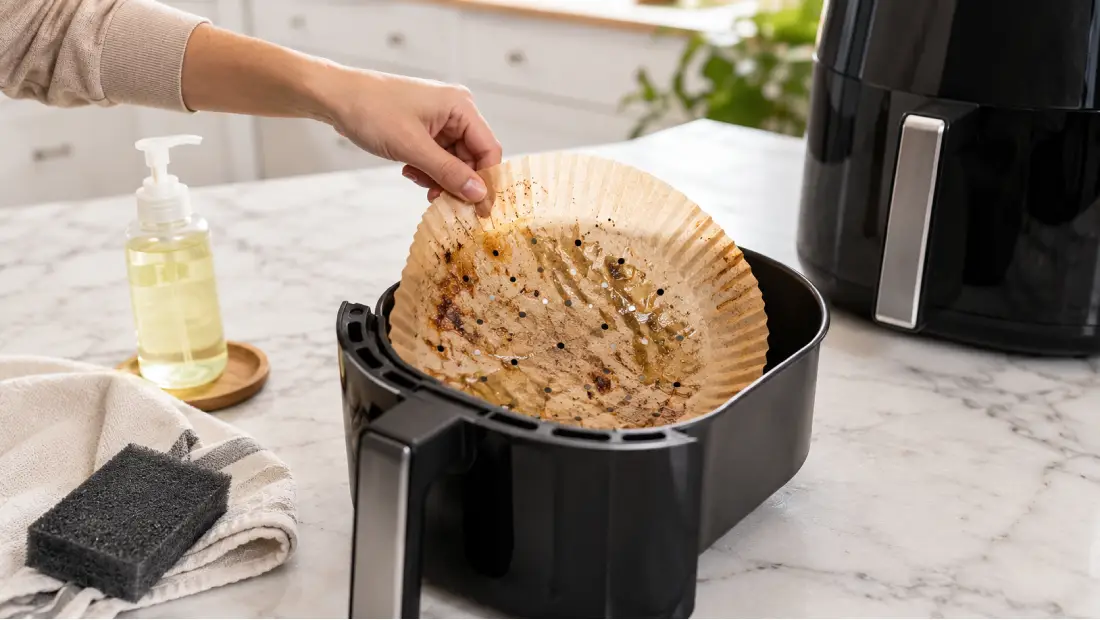
How to Clean Up After Using Air Fryer Liners
After using an air fryer liner, remove the liner and still check the basket. Liners reduce mess, but they do not replace cleaning.
Grease can leak around the edges. Crumbs can fall under the paper. Sauce can touch the basket wall.
Simple cleanup steps:
- Let the air fryer cool.
- Remove the used liner.
- Check for grease under the liner.
- Wash the basket or tray if needed.
- Wipe the inside with a damp cloth.
- Dry all parts before storage.
- Check the heating area for stuck food.
Clean after greasy meals to reduce smoke and burnt smells during the next use.
Common Mistakes With Air Fryer Liners
Most liner problems happen when the liner is loose, too large, added too early, or used with the wrong food. These mistakes can lead to smoke, soft food, or fire risk.
Avoid these mistakes:
- Adding a liner before preheating.
- Using a liner with no food on it.
- Letting paper edges curl upward.
- Buying liners without measuring the basket.
- Using paper towel as a liner.
- Using wax paper.
- Covering all airflow holes with foil.
- Reusing oily paper liners.
- Using oversized parchment.
- Ignoring the air fryer manual.
The safest liner is the one that fits, stays down, and leaves room for air.
Sources and References
- Reynolds Kitchens states that its air fryer liners are tested for air fryer use up to 400°F and says to place food on the liner before use.
- Reynolds Kitchens says to preheat the air fryer first and not insert the air fryer liner yet during preheating.
- USDA Food Safety and Inspection Service recommends cooking poultry to 165°F as measured with a food thermometer.
- Always check your air fryer manual for the liner, foil, tray, and accessory rules for your exact model.
Frequently Asked Questions About Air Fryer Liners
How do you use air fryer liners?
Place the liner flat inside the basket, add food on top, and start cooking. The food must hold the liner down so the fan cannot lift it.
Can you preheat an air fryer with a liner inside?
No, do not preheat an air fryer with an empty liner inside. Add the liner after preheating and only when food sits on top.
Do air fryer liners need holes?
Air fryer liners do not always need holes, but holes help airflow. Perforated liners are better for fries, nuggets, vegetables, and foods that need a crisp bottom.
Are paper air fryer liners safe?
Paper air fryer liners are safe when they are heat-rated, correctly sized, and weighed down by food. They are unsafe if loose, oversized, or close to the heating element.
Can silicone liners go in an air fryer?
Yes, silicone liners can go in an air fryer if they are food-safe, heat-safe, and sized for the basket. Pick a design with ridges or airflow channels when possible.
Why did my air fryer liner burn?
Your air fryer liner may have burned because it touched the heating element, curled upward, was too large, or was used during preheating without food.
Do air fryer liners affect cooking time?
Yes, liners can affect cooking time if they block airflow. Solid liners may need more shaking, flipping, or a few extra minutes.
Can I reuse disposable air fryer liners?
Do not reuse disposable paper liners that are oily, wet, torn, darkened, or covered with food residue. Replace them after cooking.
What is better, parchment or silicone air fryer liners?
Parchment liners are better for fast cleanup. Silicone liners are better for repeated use. Perforated parchment usually gives better crisping than solid paper.
Can I use paper towel as an air fryer liner?
No, do not use paper towel as an air fryer liner. Paper towel can lift, smoke, burn, or block airflow.
Key Takeaways
- Add air fryer liners after preheating, not before.
- Keep the liner flat and weighed down with food.
- Use perforated liners for crispy foods.
- Use bowl-shaped liners for messy foods.
- Do not use paper towel, wax paper, plastic, or loose oversized foil.
- Check your air fryer manual before using any liner.
- Stop cooking if the liner moves, smokes, curls, or burns.
Final Answer
The safest way to use air fryer liners is to add the liner after preheating, place food on top right away, and keep it away from the heating element. Choose the right size and shape for your basket.
Use perforated parchment for crispy food, bowl-shaped paper liners for messy food, and silicone liners for repeated use. Do not use paper towel, wax paper, plastic, or loose liners inside a running air fryer.

