

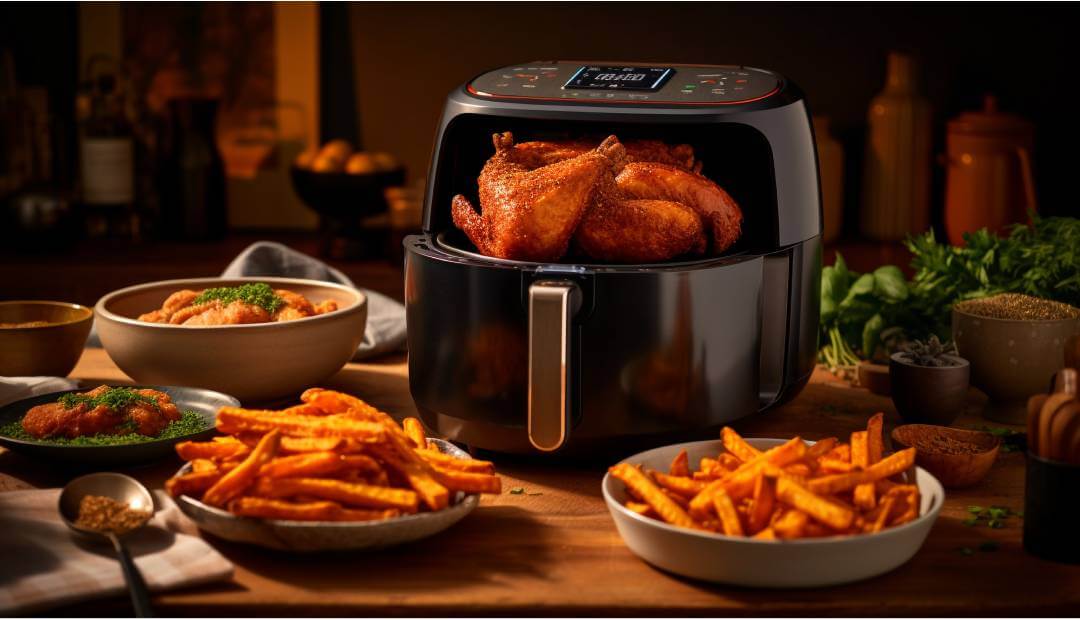
Commercial air fryers are high-capacity, heavy-duty cooking machines designed for restaurants, food trucks, and cafeterias. They cook food using fast-moving hot air instead of oil, helping reduce fat by around 20% to 40% while delivering crispy results. These units are built for all-day use, faster cooking, and often work without expensive ventilation systems.
In short:
- High-volume cooking
- Faster than home air fryers
- Less oil, healthier food
- Built for business use
More restaurants, food trucks, and small businesses are switching to commercial air fryers. The reason is simple: they cook food faster, use less oil, and cost less to run than deep fryers.
But not all commercial air fryers are the same. The right unit depends on your kitchen size, menu, and how much food you need to cook at peak hours.
This guide covers everything you need to know, including the different types of commercial air fryers, how they compare to deep fryers, what capacities are available, and what to look for when buying.
| Quick Answer:Commercial air fryers circulate hot air around food at high speed to create crispy, fried results with little or no oil. They cook food 20-25% faster than traditional deep fryers, reduce fat content by up to 80%, and cost less to run. Most are ventless, so installation is simple. |
 How Commercial Air Fryers Work
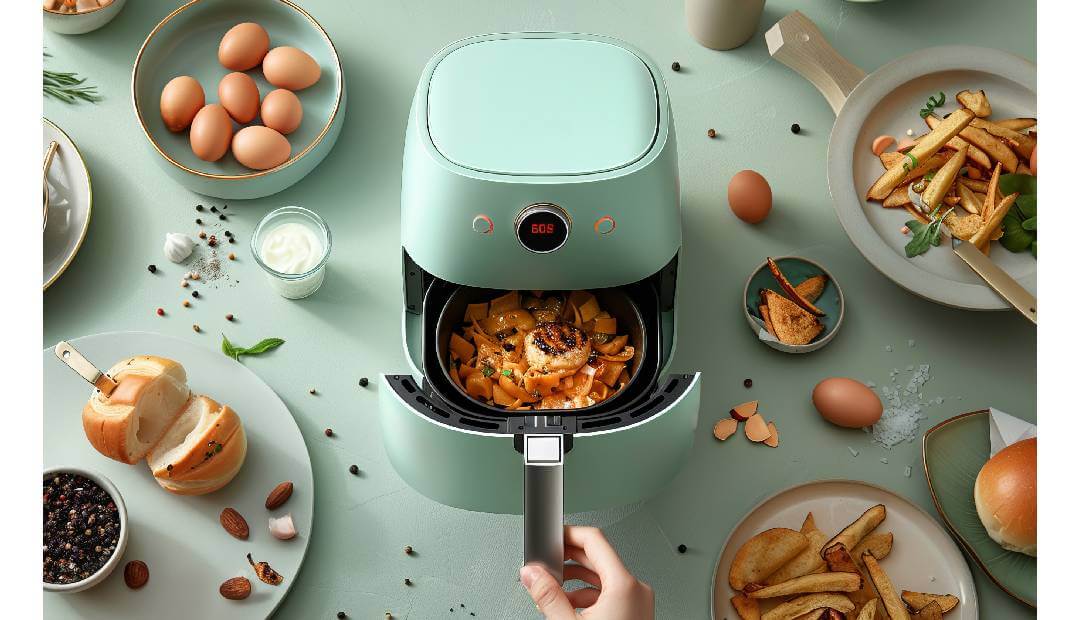
Commercial air fryers use a heating element and a powerful fan to circulate hot air around the food inside the basket.
That hot air circulation is what creates the crispy texture people associate with deep frying. The food cooks evenly on all sides without being submerged in oil.
Because the machine works in a small, enclosed space, the hot air moves faster and more efficiently than in a traditional oven. That’s why commercial air fryers can cook food 20 to 25% faster than deep fryers and up to 50% faster than standard convection ovens.
Commercial Air Fryers vs. Convection Ovens
- A commercial air fryer works like a compact, high-powered convection oven. Both use a fan and a heating element to move hot air over the food.
- The key difference is airflow intensity. Air fryers have a much smaller interior and a stronger fan. That means heat reaches the food faster and more evenly, which gives you crispier results in less time.
- For commercial kitchens that want the output of a toaster oven with the speed and crispiness of a fryer, air fryers hit the right balance.
Commercial Air Fryers vs. Deep Fryers
Deep fryers cook food submerged in hot oil. Commercial air fryers circulate hot air to achieve a similar crispy texture without the excessive oil consumption.Here is a side-by-side comparison of the two.
| Commercial Air Fryers | Deep Fryers | |
|---|---|---|
| Oil needed | Little to none | Large volume of oil required |
| Fat reduction | Reduces fat by 20% to 80% | No fat reduction |
| Calorie impact | Reduces calories by 70-80% | High calorie content |
| Acrylamide | Reduced by up to 90% | Higher levels |
| Cook speed | 20-25% faster | Baseline |
| Preheat time | Shorter, easier to operate | Longer heat-up time |
| Grease buildup | Minimal; easier to clean | Heavy grease buildup |
| Kitchen safety | Lower burn and slip risk | Hot oil burn risk |
| Energy cost | Up to 50% less energy | Higher energy use |
| Ventless install | Many models are ventless | Requires exhaust hood |
 1.The Health Case for Air Frying
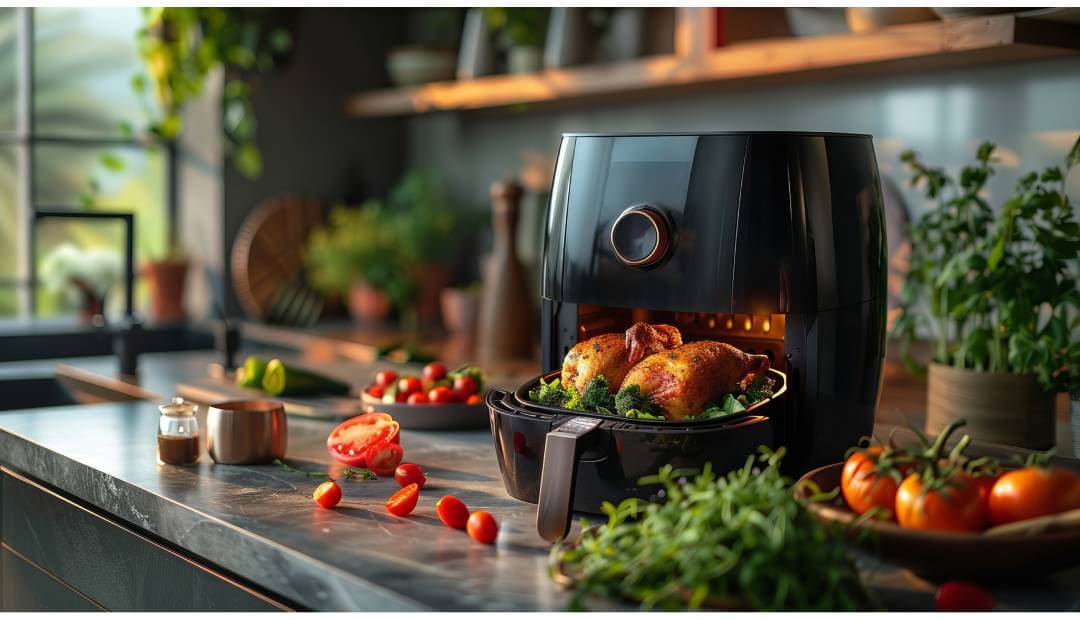
- Air frying can lower fat content by 20% to 80% compared to deep frying. It can also reduce calorie intake by 70% to 80%, which matters to health-conscious diners.
- Air frying can also lower the formation of acrylamide, a harmful substance that forms during high-heat cooking, by up to 90% compared to traditional frying.
- For restaurants and food trucks that want to offer healthier options without changing their menu, commercial air fryers are a practical way to do it.
2.The Cost Case for Air Frying
- Deep fryers need a constant supply of oil. Air fryers eliminate oil costs almost entirely and also remove the cost of oil disposal.
- Commercial air fryers can reduce energy consumption by up to 50% compared to standard ovens and deep-fat fryers. Reduced oil consumption in air fryers leads to lower operational costs for restaurants overall.
- Many commercial air fryers are also ventless, which means you can install them without building a traditional kitchen hood system. That is a significant saving for food trucks and small businesses.
Types of Commercial Air Fryers
Commercial air fryers come in two main styles: basket and oven. Each suits different kitchens and menu types.
 Basket-Style Commercial Air Fryers
- Basket-style air fryers have a cavity where food is loaded into a removable basket. This is the most common style for restaurants and food trucks.
- They are fast, easy to operate, and work well for french fries, chicken wings, frozen fries, and similar menu items. Single-basket models give the most cooking space for large items like a whole chicken.
- Dual basket models allow you to cook two different dishes at two different temperatures at the same time. For kitchens with varied menus, this is a big advantage.
 Commercial Air Fryer Ovens
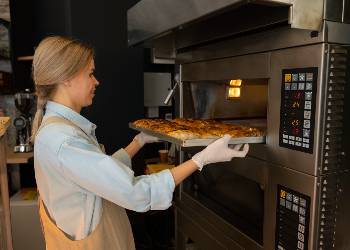
- Commercial air fryer ovens look and work more like toaster ovens. Food cooks on trays instead of in baskets.
- These units handle a wider range of cooking tasks. You can bake, roast, grill, and dehydrate in addition to air frying. They are well suited to full-menu kitchens that want to reduce the number of appliances.
- Large commercial air fryer ovens can accommodate over 20 quarts and look closer to a full-size oven than a countertop unit.
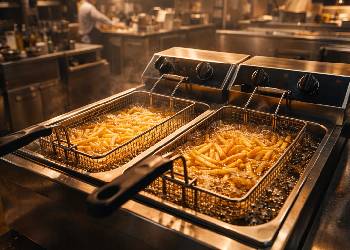 Double-Stack Commercial Air Fryers
- A high-output double-stack design stacks two air fryer units on top of each other. This increases production without expanding the footprint on your counter.
- For high-volume kitchens that need to keep up during peak hours, double-stack units are one of the most efficient options available.
Commercial Air Fryer Capacity Guide
Commercial air fryer models are typically sized by their capacities in quarts, not by physical dimensions. Knowing the right capacity for your kitchen is the most important buying decision you will make.
1.Small Commercial Air Fryers: 6 to 8 Quarts
Small commercial air fryers hold 6 to 8 quarts of products. They are ideal for start-up businesses, bars, clubs, and snack stands.
At this size, you can cook a good batch of frozen fries, chicken wings, or similar snack items. They fit easily on a countertop and most do not require a ventilation hood.
2.Mid-Size Commercial Air Fryers: 9 to 14 Quarts
Mid-size units are the most common choice for food trucks and small to mid-size restaurants. Average capacities for commercial air fryers fall between 6 and 10 quarts, with some models reaching up to 14 quarts.
The Quik n’ Crispy GF5 is the largest basket-style commercial air fryer on the market, with a 14-quart basket capacity and programmable settings via USB.
At this size, you can cook a whole chicken, large batches of french fries, or several portions of pork chops without running multiple rounds.
3.Large Commercial Air Fryers: 20+ Quarts
Large commercial air fryers can accommodate over 20 quarts. At this scale, the units look more like full ovens than countertop appliances.
When shopping for large-capacity air fryers, consider overall physical dimensions as well as the interior volume. A 20-quart unit may not fit in every kitchen without measuring first.
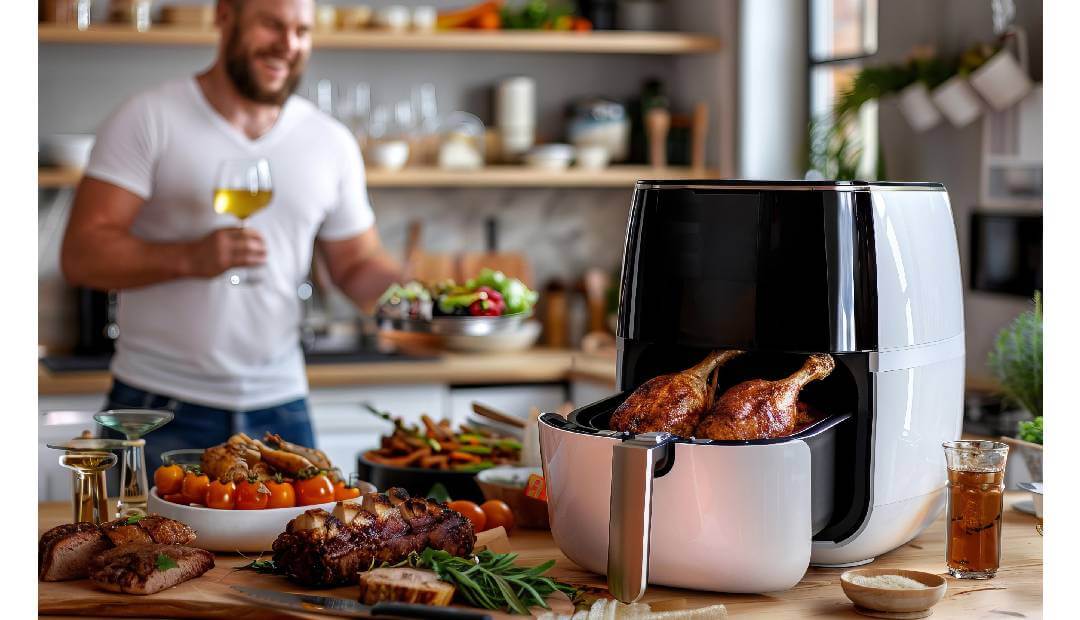 Commercial Air Fryer Models at a Glance
Use this table to compare the main types and sizes of commercial air fryers by use case.
| Model / Type | Capacity | Best For | Key Feature |
|---|---|---|---|
| Quik n' Crispy GF5 | 14 qt basket | Restaurants, food trucks | Largest basket-style commercial unit; programmable via USB |
| Double-stack commercial | 2x 6-10 qt | High-volume kitchens, peak hours | Doubles output without extra counter space |
| Dual-basket air fryer | 2x 6-8 qt | Multi-item menus | Two baskets cook different foods at different temperatures |
| Commercial air fryer oven | 20+ qt / tray | Roast, bake, dehydrate | Tray-style like a toaster oven; suits full-menu kitchens |
| Small commercial (6-8 qt) | 6-8 qt | Bars, snack stands, small businesses | Lower cost entry point; easy to add without hood system |
What to Look for When Buying Commercial Air Fryers
Not every commercial air fryer suits every kitchen. Here are the factors that matter most.
1.Capacity and Batch Size
- Most commercial air fryers use 2,000W to 5,000W and are designed for 2 to 5+ pound batches. Think about how much food you need to cook per order and how fast orders come in during peak hours.
- If you are cooking for a family-size or small restaurant setting, a 9-quart unit is a practical minimum to avoid cooking in multiple batches.
2.Temperature Range
- A good commercial air fryer offers a wide temperature range, enabling more cooking methods. Most air fryers have a temperature range that covers standard air frying and also supports baking, broiling, and roasting.
- Some commercial models include a built-in temperature probe that senses meat doneness and adjusts cook settings automatically. For busy kitchens, this removes guesswork from the cooking process.
3.Ventless Installation
- Many commercial air fryers are ventless, which allows installation in locations without a traditional kitchen hood system. This is one of the main reasons food trucks and small businesses choose air fryers over deep fryers.
- Before buying, confirm whether the unit is fully ventless or requires any exhaust setup. This affects where you can install it and what build-out costs you might face.
4.NSF Certification
- High-quality commercial air fryers prioritize NSF certification for health compliance. NSF-certified units meet sanitation and safety standards required by most commercial kitchen regulations.
- If you are operating in a restaurant or any licensed food service kitchen, confirm NSF certification before purchasing.
5.Cooking Modes
- Most air fryers include toast and broil settings. Baking and dehydrating modes are less common but available on many commercial air fryer ovens.
- If you want one machine to handle multiple menu items, look for units that can bake, roast, grill, and dehydrate in addition to air frying. This reduces the number of appliances you need and simplifies your kitchen setup.
 Cleaning and Maintaining Commercial Air Fryers
Regular cleaning of commercial air fryers is essential to prevent grease buildup and maintain good performance. A dirty fryer affects taste, slows cooking, and shortens the life of the machine.
Daily Cleaning Routine
After each service, follow these steps:
1. Remove the basket and tray. Wash both with warm soapy water or put them in the dishwasher if the parts are dishwasher safe.
2. Wipe the interior of the fryer with a damp cloth. Focus on areas where grease and crumbs collect.
3. Clean the exterior surfaces to maintain hygiene and appearance in the kitchen.
4. Let all parts dry fully before reassembling.
Weekly and Deep Cleaning
- Schedule regular deep cleaning sessions for your commercial air fryers to ensure longevity. Once a week, check for grease buildup around the heating element and fan.
- Grease buildup near the heating element is a fire risk. Catching it early through regular cleaning keeps the kitchen safe and the machine running efficiently.
| Important:
Avoid overcrowding the basket of a commercial air fryer. Packing too much food in at once reduces airflow and results in uneven cooking.Cook in a single layer where possible, or in small batches. This maintains crispy texture and consistent cooking times. |
Tips for Getting the Best Results from Commercial Air Fryers
• Preheat before cooking. Preheating time is shorter than a deep fryer, but a 3 to 5 minute preheat still improves consistency, especially for crispy results.
• Use a light oil coating for certain foods. Air fryers need far less oil than deep fryers. A light spray of oil on food like chicken wings or pork chops helps achieve a crispier texture.
• Discover what your model does best. Air fryer models vary in airflow, temperature settings, and basket design. Try a few different dishes to discover what your unit handles most efficiently.
• Match the unit to the menu item. Basket models excel at fries, wings, and frozen food. Commercial air fryer ovens handle pizza, whole chicken, roast, and baked goods better.
• Check temperature settings for different foods. Vegetables cook faster than proteins. Frozen food may need different temperature settings than fresh. Follow recommended temps to get delicious results consistently.
Frequently Asked Questions
What are commercial air fryers used for?
Commercial air fryers cook food using hot air circulation instead of oil. They are used in restaurants, food trucks, bars, and high-volume kitchens to produce crispy fried food faster, with less oil, and at lower cost than deep fryers. They can also bake, roast, and dehydrate, depending on the model.
How are commercial air fryers different from home air fryers?
Commercial grade air fryers are built for higher volume and continuous use. They have larger capacities, stronger heating elements, more durable construction, and NSF certification for food service compliance. Home air fryers are designed for lighter use and smaller portions.
What size commercial air fryer do I need?
Small commercial air fryers holding 6 to 8 quarts suit bars, snack stands, and start-up businesses. Mid-size units of 9 to 14 quarts work well for food trucks and small restaurants. Large commercial air fryers at 20 or more quarts suit high-volume kitchens. Average capacities for most commercial models fall between 6 and 10 quarts.
Do commercial air fryers need a kitchen hood?
Many commercial air fryers are ventless, which means they do not need a traditional kitchen hood or exhaust system. This makes them popular with food trucks and small businesses that want to add frying capability without a major kitchen build-out. Always confirm ventless certification before buying.
How do commercial air fryers reduce costs?
Commercial air fryers eliminate most oil costs and oil disposal fees. They can reduce energy consumption by up to 50% compared to deep fryers and standard ovens. Reduced oil consumption leads to lower operational costs for restaurants. They also require less preheating time, which reduces idle energy use.
Are commercial air fryers healthier than deep fryers?
Yes. Air frying reduces fat content by 20% to 80% compared to deep frying and can cut calorie intake by 70% to 80%. Air frying also lowers the formation of acrylamide, a harmful substance that forms during high-heat cooking, by up to 90%. For kitchens that want to offer healthier alternatives, commercial air fryers are a direct swap for deep fryers on most menu items.
What is the biggest commercial air fryer available?
The Quik n’ Crispy GF5 is the largest basket-style commercial air fryer with a 14-quart basket capacity. For even larger production, some commercial air fryer ovens can accommodate over 20 quarts and are used in high-volume commercial kitchens.
How do I clean a commercial air fryer?
Remove and wash the basket and tray after each use. Wipe the interior with a damp cloth. Clean the exterior to maintain hygiene. Schedule weekly deep cleaning to prevent grease buildup around the heating element and fan. Using dishwasher-safe parts makes daily cleaning much faster.
Type your paragraph here

