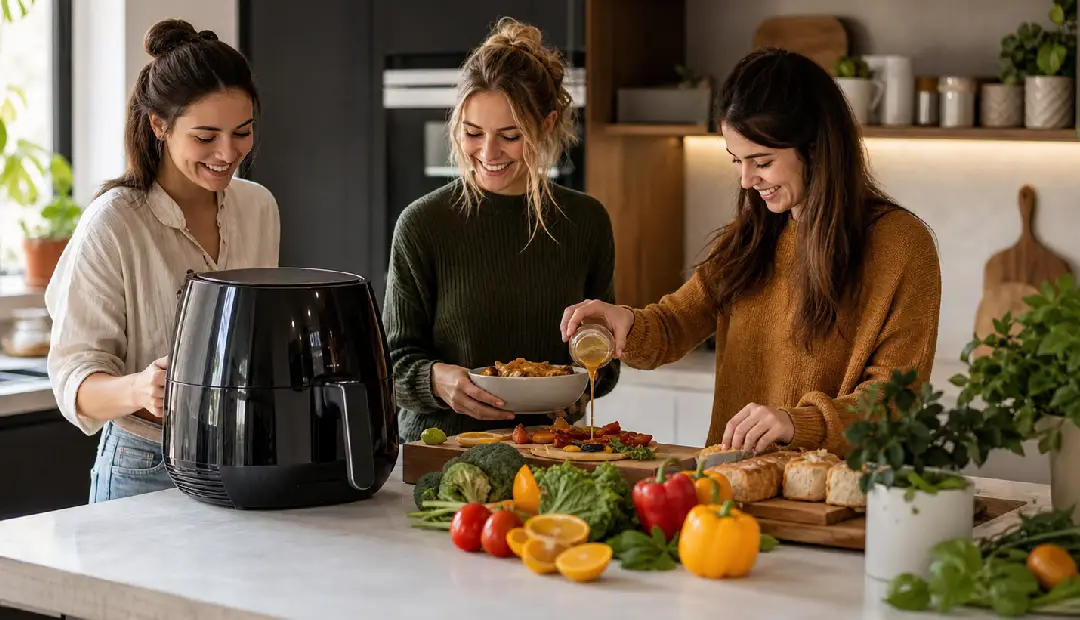
HomePros & ConsBest Ceramic Air Fryer Ovens Safe for Your Kitchen

Best Ceramic Air Fryer Ovens Safe for Your Kitchen

You want to air fry without worrying about what’s coating the inside of your appliance.

That is a reasonable concern. Many air fryers on the market use a non-stick coating that can release harmful chemicals when scratched or overheated. Finding a genuinely non-toxic air fryer means knowing exactly what materials touch your food.

Many air fryers give you no specific information about what their interior coating contains. That gap is the problem this guide addresses.

This guide breaks down everything. You will find the top non-toxic air fryer picks for 2026, a clear explanation of which cookware materials are actually safe, and answers to the questions most buyers overlook before purchasing.

Why the Interior of Your Air Fryer Actually Matters

The Issue with Standard Non-Stick Coatings

A standard air fryer ships with a basket coated in polytetrafluoroethylene (PTFE), the synthetic compound behind traditional nonstick coatings. That surface is convenient and low-friction. Scratches and temperatures beyond the safe range trigger the breakdown of nonstick coatings.


Damaged or overheated PTFE-based non-stick coatings release toxic fumes that can harm humans and kill pet birds.These fumes come from polyfluoroalkyl substances (PFAS), a broad family of synthetic chemicals that break down very slowly in the environment and in the human body.

PFAS are often called chemicals forever because they accumulate rather than degrade. Research has linked exposure to PFAS to several health concerns, including hormonal disruption and increased cancer risk . That is why so many home cooks are looking for a genuinely non-toxic air fryer .

Why Standard Air Fryers Still Use Synthetic Coatings

The answer is cost and convenience. Traditional nonstick cookware with PTFE coatings is cheap to manufacture and produces a very slick surface that makes food release easy. Ceramic and stainless steel interiors cost more to produce, so many air fryers at lower price points still default to synthetic coatings.

Air fryers marketed as “non-stick” often give no specific details about what that coating contains. That vague language is a warning sign. Avoid products that use terms like “eco-coating” or “healthy coating” without specifying the material.

What Toxic Cookware Looks Like on a Label

Toxic cookware typically avoids naming its coating directly. Furthermore, if a product listing does not state whether the cooking surface is PTFE-free, PFOA-free, and PFAS-free, assume it is not.

Genuinely non-toxic air fryers clearly state their materials. Look for phrases like “ceramic-coated basket,” “stainless steel inside,” or “borosilicate glass interior.” Anything less specific is not worth trusting.

Best Ceramic Air Fryer OvensWhat Makes a Non-Toxic Air Fryer Actually Safe?

The Role of Ceramic Coating

A ceramic coating is a silica-based layer applied over metal. It creates a nonstick surface without synthetic chemicals like PTFE or PFOA. Ceramic coatings are naturally more heat-stable and do not degrade into micro-particles at standard air frying temperatures of 350 to 450 degrees Fahrenheit.

That heat stability is a key advantage. Traditional nonstick coatings begin to break down around 500 degrees Fahrenheit, which is not far above normal air frying conditions. Ceramic holds up better and does not carry the same risk of releasing toxic fumes at high heat.

Ceramic-coated cookware can provide a nonstick surface that is easier to clean and requires less oil for cooking, making it a popular choice among home cooks. That combination of safety and convenience explains the growing demand for ceramic air fryers.

The Difference Between Ceramic and PTFE Coatings

PTFE coatings are smooth, very slick, and durable when treated carefully. The problem is that metal utensils can scratch them, and heat can degrade them. Once a PTFE coating is compromised, the underlying surface is exposed, and chemicals can transfer to food.

A ceramic coating creates a similar nonstick surface but without synthetic polymers. High-quality ceramic cookware is designed to withstand high temperatures without releasing toxic fumes or flaking, making it a durable and safe cooking option.

What to Look for on the Label

Before buying any non-toxic air fryer, check these four things:

  • PTFE-free, PFOA-free, and PFAS-free: These should be explicitly stated on the product page.
  • No heavy metals: Look for confirmation that the coating is free of lead and cadmium.
  • No undisclosed fillers: Some lower-quality ceramics may contain undisclosed fillers, so look for brands that confirm their ceramic is free of PTFE, PFOA, lead, and cadmium.
  • Specific material name: The label should say “ceramic-coated basket” or “ceramic cooking surface,” not just “non-toxic coating.”

Ensure the ceramic coating is explicitly listed as PTFE-free, PFOA-free, and PFAS-free to ensure non-toxic cooking. If the listing is vague, move on.

Safety Certifications That Actually Matter

Look for UL, ETL, or CSA certifications, which guarantee the appliance meets rigorous safety standards. These certifications cover electrical and fire safety. They are not the same as coating safety certifications, but they confirm the unit has been tested by an independent body.

Key safety features to look for include UL or ETL certifications, automatic shut-off, and cool-touch exteriors. These features reduce the risk of fire and burn injuries during everyday cooking.

The Three Types of Non-Toxic Air Fryers

The best non-toxic air fryers fall into three main categories: ceramic, stainless steel, and glass. Each has trade-offs worth knowing before you buy.

Ceramic Air Fryers

Ceramic air fryers use a silica-based interior layer applied over the cooking basket or interior walls. They are free from PFAS and provide even heat distribution without relying on synthetic chemistry.

Ceramic coatings are generally easier to clean, but look for dishwasher-safe accessories for added convenience. The main limitation is that the silica surface can occasionally flake or lose its non-stick properties over time if cleaned with abrasive materials.

Stainless Steel Air Fryers

Stainless steel air fryers are considered a safe option because stainless steel is stable, non-porous, and does not react with food. A stainless steel inside means there is no coating to scratch or degrade.

Stainless steel cookware is durable, nonreactive, and can handle high heat without relying on synthetic coatings, making it a popular choice among chefs. The trade-off is that stainless steel surfaces can cause food to stick more than ceramic, so you may need a light coating of olive oil.

Best Ceramic Air Fryer Ovens Safe for Your KitchenGlass Air Fryers

Glass air fryers use borosilicate glass for the cooking vessel. Glass air fryers are noted for their non-toxic cooking surfaces and superior visibility, allowing users to monitor food without opening the appliance.

The Big Boss Air Fryer is one of the most recognized glass air fryers. Glass is completely non-reactive and produces zero off-gassing. The downside is that glass units tend to be bulkier and can break with rough handling.

Top Non-Toxic Air Fryer Picks for You

1. Cosori 9-in-1 TurboBlaze Air Fryer 6 Qt – Best Seller Ceramic Coating

Interior: PFAS-free ceramic coating

Style: Basket

Certifications: PTFE-free, PFOA-free, PFAS-free

The Cosori 9-in-1 TurboBlaze Air Fryer is a top pick because it is PFAS-free and cooks food evenly across all nine cooking functions without putting harmful fumes into the air. It is a great choice for anyone who wants a safe air fryer that can handle everything from air frying to baking.

The ceramic surface heats up between 90°F and 450°F and stops food from sticking, so cooking anything from frozen snacks to a full roast is easy. The wide temperature range gives you good control over how food cooks, and the basket is simple to clean after every use.

Key details:

  • The ceramic coating has no PTFE, PFOA, or PFAS, so you can cook without worrying about harmful chemicals.
  • It heats evenly from 90°F to 450°F, giving you crispy, well-cooked food every time with no hot spots.
  • The basket is easy to clean after every use and holds up well with daily cooking.
  • Nine cooking functions including Air Fry, Roast, Bake, Broil, Dry, Proof, Reheat, and Keep Warm cover just about every cooking need.

The coating can wear down over time if you use metal utensils. Use silicone or wooden tools to keep the surface in good shape longer.

Best for: Anyone who wants a popular, safe air fryer with a ceramic coating, lots of cooking options, and strong everyday performance.

2. Ninja Crispi 4-in-1 Glass Air Fryer – Best Non-Toxic Glass Option

Interior: Non-toxic glass containers

Style: Glass bowl with lid

Certifications: Non-toxic, PFAS-free

The Ninja Crispi 4-in-1 Glass Air Fryer is a strong pick for anyone who wants to skip coatings altogether. Instead of a ceramic or nonstick basket, it uses glass containers, so there is nothing to scratch, chip, or wear down over time. It is a great choice for anyone who wants to cook without worrying about chemicals getting into their food.

The glass containers heat up to 450°F and come with lids, making them easy to store leftovers right after cooking. The containers are also safe for the microwave, freezer, and dishwasher, which makes everyday use and cleanup much easier.

Key details:

  • Glass cooking containers mean there is no nonstick coating to scratch or break down over time.
  • Heats up to 450°F with four cooking functions including Max Crisp, Air Fry, Bake, and Recrisp.
  • Comes with a 4-quart and a 6-cup glass container, both with lids for easy storage.
  • Glass containers are microwave, freezer, and dishwasher safe for simple cleanup and storage.

Glass takes longer to heat up than metal baskets and can feel heavier to handle. Take care when lifting hot glass containers out of the unit.

Best for: Anyone who wants a truly coating-free air fryer and likes the idea of cooking, storing, and reheating food in the same glass container.

3. Ninja Crispi Pro – Best Non-Toxic Glass Pod Air Fryer

Interior: Borosilicate glass pod
Style: Glass container air fryer
Visibility: Full view during cooking

The Ninja Crispi Pro is a glass air fryer that uses a borosilicate glass cooking pod as its main vessel. Glass is a naturally non-reactive material with no coatings to degrade or release, making it one of the safest cooking surfaces available.

The glass design lets you see your food at all times, so there is no need to open the appliance and lose heat. That matters when you are air frying delicate foods or monitoring a large protein.

Key details:

  • Borosilicate glass cooking surface contains zero synthetic coatings.
  • No non-stick coating inside means no risk of toxic fumes at high temperatures.
  • The glass pod cleans up easily and is nonreactive with acidic or fatty foods.
  • Compact design makes it easy to store.
  • Works well for French fries, roasted vegetables, and small cuts of protein.

The glass pod has a smaller capacity than most basket-style air fryers. It is better suited to one or two portions.

Best for: Single cooks or couples who want a genuinely non-toxic cooking surface and value visibility over capacity.

4. Chefman Air Fryer 8 Qt – Best Large Capacity Stainless Steel Pick

Interior: Nonstick dishwasher-safe basket

Style: Basket

Build: Stainless steel exterior

The Chefman Air Fryer 8 Qt is a good pick for anyone who wants a large air fryer with a stainless steel build. The stainless steel exterior means the outside of the unit does not have any coating that can break down or release harmful chemicals over time.

The nonstick basket is dishwasher safe, which means you can clean it without heavy scrubbing that wears down the surface faster. Keeping the basket clean and scratch-free is one of the best ways to lower the risk of the coating breaking down during cooking.

Key details:

  • Stainless steel exterior avoids the use of plastic or coated materials on the outside of the unit.
  • The nonstick basket is dishwasher safe, which helps protect the surface and extend its lifespan.
  • Avoid using metal utensils inside the basket to keep the nonstick surface intact and reduce the chance of flaking.
  • Heating up to 450°F stays within a safe range when the basket coating is kept in good condition.

The nonstick basket can wear down over time if metal utensils are used. Stick to silicone or wooden tools to keep the surface from scratching and breaking down.

Best for: Anyone who wants a large stainless steel air fryer and is careful about keeping the nonstick basket in good condition to reduce chemical exposure during cooking.

5. Bella 4Qt Slim Air Fryer – Best Budget Ceramic Nonstick Pick

Interior: EverGood™ Ceramic Nonstick Coating

Style: Basket

Certifications: Ceramic nonstick, PTFE-free, PFOA-free

The Bella 4Qt Slim Air Fryer is a great pick for anyone who wants a safe, affordable air fryer with a ceramic nonstick coating. The EverGood™ ceramic coating skips the harmful chemicals found in traditional nonstick surfaces, so you can cook without worrying about toxic fumes getting into your food.

The ceramic surface releases food cleanly without needing any extra oil, and the 60-minute auto shutoff keeps the unit from overheating, which is one of the main reasons nonstick coatings break down and release harmful fumes in the first place.

Key details:

  • EverGood™ ceramic nonstick coating is free of PTFE and PFOA, making it a safer choice for everyday cooking.
  • The 60-minute auto shutoff stops the unit from overheating, which helps protect the ceramic coating from breaking down.
  • Adjustable temperature settings give you control over heat levels, reducing the risk of pushing the coating past its safe range.
  • The ceramic basket releases food cleanly without the need for chemical cooking sprays that can damage nonstick surfaces over time.

The ceramic coating can wear down faster if metal utensils are used. Stick to silicone or wooden tools to keep the surface intact and safe for longer.

Best for: Anyone who wants an affordable, ceramic-coated air fryer that keeps harmful chemicals out of the cooking process without spending a lot of money.

Comparison Table: Best Non-Toxic Air Fryers at a Glance

ModelInterior MaterialPFAS-FreeDishwasher SafeCapacityStyle
Typhur SyncCeramic coatingYesYesMediumBasket
Wonder OvenCeramic coatingYesAccessories onlyLargeOven style
Ninja Crispi ProBorosilicate glassYesYesSmallGlass pod
Big Boss Air FryerGlass domeYesPartial16 qtGlass dome
Stainless Steel BasketStainless steelYesYesMediumBasket

Non-Toxic Cookware Materials: What Is Actually Safe?

Understanding cookware materials helps you make better decisions beyond just the air fryer. Many people replace their non-toxic air fryer but continue using toxic cookware on the stovetop.

1.Stainless Steel

Stainless steel is one of the most widely trusted materials in professional kitchens. It is durable, nonreactive, and handles high heat without any synthetic coatings.

A stainless steel pan does not require seasoning and does not degrade with repeated use. It is also easy to clean and nonreactive with acidic foods like tomatoes and citrus. If you are building a set of non-toxic cookware, a stainless steel pan is the logical starting point.

The main trade-off is that stainless steel can stick with certain foods, especially morning eggs or fish. Preheating the pan fully before adding oil reduces sticking significantly.

2.Cast Iron

Cast iron has been used in kitchens for generations. It is known for its excellent heat retention and durability, making it a long-lasting option for cooking.

A well-seasoned cast-iron surface becomes naturally nonstick over time. Cast iron is ideal for high-heat cooking, including searing meat, baking cornbread, and frying. It adds a small amount of iron to food, which is not harmful and can actually benefit people with iron deficiency.

Cast iron is naturally nonstick when properly seasoned, meaning there is no coating to degrade or replace. The downside is that cast iron is heavy and requires hand-washing to preserve its seasoning.

3.Enameled Cast Iron

Enameled cast iron combines the heat retention properties of cast iron with a glass enamel surface, which is easier to clean and does not require seasoning.

The enamel layer on enameled cast iron is free from PTFE and PFAS. It is nonreactive with acidic ingredients, which makes it more versatile than bare cast iron for dishes like tomato sauce or wine-braised proteins.

Enameled cast iron is also dishwasher safe in most cases, though hand-washing extends its life. The enamel layer can chip if dropped or struck with metal utensils, so handle it with care. A Dutch oven made from enameled cast iron is one of the most practical investments in non-toxic cookware.

Best Ceramic Air Fryer Ovens Safe for Your Kitchen4.Carbon Steel

Carbon steel cookware develops a natural seasoning layer that functions as a low-stick surface, similar to cast iron, and is suitable for high-heat cooking.

A carbon steel pan is lighter than a cast-iron pan, which makes it easier to handle for everyday cooking. Carbon steel is the material of choice for professional wok cooking and crepe pans because it responds quickly to heat changes.

Like cast iron, carbon steel requires seasoning and should be hand-washed. Once the seasoning is established, a carbon steel pan performs comparably to a non-stick surface without any synthetic coatings. A carbon steel pan that is well-maintained can last decades.

5.Ceramic Coating

Ceramic-coated cookware is considered a safer alternative to traditional nonstick options, as it does not contain PFAS and can provide a nonstick surface without harmful chemicals.

Ceramic coatings work well for low to medium-heat tasks. They are not ideal for high-heat searing because extreme temperatures can shorten the life of the coating. Ceramic pans are excellent for scrambled eggs, sauteed vegetables, and reheating without sticking.

The main limitation of a ceramic surface is longevity. Even high-quality ceramic can lose its nonstick properties faster than stainless steel or cast iron if exposed to metal utensils or abrasive sponges.

Best Non-Toxic Cookware Picks for You

1. Astercook 21 Pcs Ceramic Cookware Set – Best for Everyday Cooking

Interior: Ceramic nonstick coating

Style: Pots and pans set with detachable handles

Certifications: PTFE-free, PFOA-free, ceramic nonstick

The Astercook 21 Pcs Ceramic Cookware Set is a good pick for anyone switching away from traditional nonstick cookware. The ceramic coating is free of PTFE and PFOA, so you can cook daily meals without worrying about harmful fumes.

The ceramic surface releases food cleanly without extra oil, and the pans are oven safe and induction ready, giving you plenty of cooking options within safe temperature ranges.

Key details:

  • Ceramic nonstick coating is free of PTFE and PFOA, making it a safer choice for daily cooking.
  • Oven safe design lets you cook at controlled temperatures without pushing the coating past its safe range.
  • The detachable handles make the pans easier to clean properly, which helps protect the ceramic surface from early wear.
  • Induction ready and stackable, making it a practical full-kitchen swap away from chemical-coated cookware.

The ceramic coating can wear down faster if metal utensils are used. Stick to the included silicone and wooden tools to keep the surface intact and safe for longer.

Best for: Anyone who wants a full ceramic cookware set that replaces traditional nonstick pans with a safer, chemical-free cooking surface for everyday use.

2. Caraway Deluxe 16 Piece Ceramic Cookware Set – Best Premium Non-Toxic Pick

Interior: Ceramic nonstick coating

Style: Pots, frying pans, lids, and kitchen storage

Certifications: PFAS-free, PFOA-free, ceramic nonstick

The Caraway Deluxe Ceramic Cookware Set is a strong pick for anyone who wants a full kitchen upgrade without harmful chemicals. The ceramic coating is free of PFAS and PFOA, so you can cook without worrying about toxic chemicals getting into your food.

The ceramic surface works on all stovetops and is oven safe, giving you safe cooking options across a wide range of heat sources without pushing the coating past its safe limits.

Key details:

  • Ceramic coating is fully free of PFAS and PFOA, making it one of the cleaner nonstick options on the market.
  • Oven safe and compatible with all stovetops, so you can cook safely across different heat sources.
  • Comes with kitchen storage included, which helps protect the ceramic coating from scratches when not in use.
  • 16-piece set covers everything you need to fully replace chemical-coated cookware in your kitchen.

The ceramic coating can wear down if metal utensils are used. Stick to silicone or wooden tools to keep the surface safe and scratch-free.

Best for: Anyone who wants a complete, chemical-free ceramic cookware set that covers every cooking need without cutting corners on safety.

3. Lodge Seasoned Cast Iron Skillet 12 Inches – Best Non-Toxic Coating-Free Pick

Interior: Natural seasoned cast iron surface

Style: 12-inch skillet

Certifications: Non-toxic, coating-free, nonstick

The Lodge Seasoned Cast Iron Skillet is a great pick for anyone who wants to cook without any coating at all. Cast iron has no PTFE, PFOA, or PFAS because it does not need a chemical coating to be nonstick. The natural seasoning builds up over time and creates a safe, chemical-free cooking surface that only gets better with use.

The skillet works on the stove, oven, grill, and campfire, giving you a wide range of cooking options with zero risk of a coating breaking down or releasing harmful fumes at high heat.

Key details:

  • No synthetic coating of any kind means zero risk of PTFE, PFOA, or PFAS getting into your food.
  • The natural seasoning acts as a nonstick surface that grows stronger the more you cook with it.
  • Works on all heat sources including stove, oven, grill, and campfire without any safety concerns.
  • Comes with a silicone hot handle holder for safer handling without extra chemical-coated accessories.

Cast iron is heavier than standard pans and needs to be dried fully after washing to prevent rust. Avoid soaking it in water to keep the seasoning intact.

Best for: Anyone who wants a truly coating-free, non-toxic pan that lasts for decades without ever needing to be replaced.

4. CAROTE 22 Pcs Ceramic Cookware Set – Best Non-Toxic Full Kitchen Set

Interior: Ceramic nonstick coating

Style: Pots and pans set

Certifications: PFAS-free, PFOA-free, non-toxic

The CAROTE 22 Pcs Ceramic Cookware Set is a solid pick for anyone who wants to replace all their old chemical-coated pans at once. The ceramic coating is free of PFAS and PFOA, so you can cook everyday meals without worrying about harmful chemicals getting into your food.

The large 22-piece set gives you everything you need to fully switch to safer cookware in one go, without having to buy individual pans one at a time.

Key details:

  • Ceramic coating is fully free of PFAS and PFOA, keeping harmful chemicals out of your cooking.
  • Non-toxic kitchen cooking set means every piece in the set meets the same safe material standard.
  • 22 pieces cover every cooking need, making it easy to do a full swap from chemical-coated cookware.
  • The ceramic nonstick surface releases food cleanly without needing chemical cooking sprays that can damage the coating over time.

The ceramic coating can scratch and wear down if metal utensils are used. Stick to silicone or wooden tools to keep every piece in the set safe and working well for longer.

Best for: Anyone who wants to do a full kitchen switch to non-toxic, PFAS-free ceramic cookware without buying pieces one by one.

Best Ceramic Air Fryer Ovens Safe for Your Kitchen

How to Use Your Air Fryer Safely

1.Use the Right Utensils

Use silicone or wooden utensils inside your air fryer. Metal utensils can scratch ceramic coatings, potentially exposing the underlying metal and damaging the nonstick surface.

Even for stainless steel units, silicone utensils are a better habit. They will not scratch or dent the cooking surface. A set of silicone tongs and a silicone spatula covers most air frying tasks.

Avoid metal utensils in any ceramic-coated air fryer basket. One deep scratch can compromise the coating and create a spot where food sticks and builds up.

2.Keep the Basket Clean

A dirty basket is a fire risk. Grease buildup can smoke or ignite at high cooking temperatures. Clean your air fryer basket after every use.

Choosing units with removable, dishwasher-safe baskets helps keep the unit free of grease, preventing smoking and potential fire risks. If the basket is machine washable, use that option to avoid abrasive hand-scrubbing that can damage the non-stick surface.

For baskets that are not machine washable, soak them in warm soapy water and use a soft sponge. Never use steel wool or abrasive pads on a ceramic cooking surface.

3.Placement and Ventilation

Always place your oven on a heat-resistant surface with at least 5 to 6 inches of clearance on all sides to ensure proper airflow. Restricted airflow causes overheating, which puts stress on both the appliance and any coating inside.

Keep your air fryer away from flammable materials, cabinets, and curtains. The exhaust from an air fryer is hot and needs space to dissipate. A small amount of counter space around the unit is not optional.

4.Avoid Pushing the Temperature Range

Every air fryer has a rated temperature range. Operating consistently near the top of that range accelerates wear on any non-stick surface and increases the risk of residual coating degradation.

For most air frying tasks, including French fries, roasted vegetables, and chicken, 375 to 400 degrees Fahrenheit is more than enough heat. Reserve the maximum temperature for occasional tasks that require it.

High temperatures above the rated maximum can warp coatings and produce off-gassing even in units that use PFAS-free materials. Check the manual for your specific model’s temperature limit.

5.Avoid Overcrowding the Basket

Overcrowding blocks airflow and forces the unit to work harder. It also means food does not get the hot air circulation it needs to become perfectly crispy.

Cook in batches when needed. One layer of food in the air fryer basket consistently outperforms two overcrowded layers. Splitting up the food takes more time but produces better results and puts less stress on the unit.

Best Ceramic Air Fryer Ovens Safe for Your KitchenWhat Foods Work Best in a Non-Toxic Air Fryer?

1.French Fries and Starchy Foods

French fries are the benchmark food for air fryer performance. Starchy foods like potatoes cook well in a basket-style air fryer because the high heat and rapid airflow dry out the surface while the inside stays soft.

For French fries, cut potatoes evenly, toss with a small amount of olive oil, and spread them in a single layer inside the appliance. A cooking temperature of 380 to 400 degrees Fahrenheit for 18 to 22 minutes produces consistently crispy results. You do not need the deep fryer for this.

Frozen French fries work even better because the flash-freezing process locks in moisture. They go from freezer to plate in about 12 minutes without added oil. That is one area where the air fryer clearly outperforms a traditional oven.

2.Roast Chicken and Whole Chicken

A whole chicken fits in most oven-style air fryers and cooks faster than in a traditional oven. The circulating hot air produces a crispy skin without the need for basting.

For a roast chicken in an oven-style air fryer, cook at 360 degrees Fahrenheit for 25 to 30 minutes per pound. Check the internal temperature with a meat thermometer. The breast should reach 165 degrees Fahrenheit at the thickest point.

The Wonder Oven is one of the best oven-style air fryers for whole chicken because its larger cavity accommodates a standard 3 to 4-pound bird without crowding.

3.Roasted Vegetables

Roasted vegetables benefit from air frying because the dry heat caramelizes the exterior while the interior stays tender. Broccoli, cauliflower, carrots, and Brussels sprouts all work well.

Toss vegetables in a small amount of olive oil and season before loading them into the cooking basket. Cook at 375 degrees Fahrenheit for 10 to 15 minutes, shaking the basket halfway through. Even heat distribution is what separates a good air fryer from a great one for vegetable cooking.

What Not to Cook in an Air Fryer

Some foods do not perform well in an air fryer. Wet batters, large cuts of meat that require slow-cook methods, and delicate fish with thin skin can all pose challenges.

Wet batter slides off food in the airflow and drips to the bottom of the unit. Use a dry coating instead. Large cuts like a whole pork shoulder are better in a Dutch oven of enameled cast iron, where the slow-cook environment retains moisture.

Air Fryer Buying Guide: Questions to Ask Before You Buy

What Is the Interior Material?

This is the most important question. The cooking surface of an air fryer determines whether it is safe. Confirm whether the interior is ceramic-coated, stainless steel, or glass. Never buy an air fryer that uses vague terms for its cooking surface.

Most air fryers that do not specify their interior material use traditional nonstick coatings. That is a meaningful distinction for buyers who want a non-toxic air fryer.

What Size Do You Actually Need?

Air fryer sizing is often described in quarts. A 2 to 4-quart basket works for one or two people. A 5 to 7-quart basket handles two to four people. Oven-style air fryers, at 10 to 30 quarts, work for families or batch cooking sessions.

Buying too large a unit wastes counter space. Buying too small means cooking in multiple rounds for every meal. Match the size to how many people you typically cook for.

Does It Come with Easy-Clean Accessories?

Cleaning is the primary source of ceramic surface wear. Dishwasher-safe accessories extend the life of any non-stick coating by reducing the need for hand-scrubbing.

If the air fryer basket is not rated for machine washing, check whether the manufacturer recommends specific cleaning tools. Abrasive sponges and steel wool will destroy a ceramic cooking surface in a few uses.

How Does the Temperature Range Compare?

An air fryer that tops out at 390 degrees Fahrenheit will limit some cooking tasks. Most foods require between 350 and 400 degrees Fahrenheit, but some recipes call for a brief burst at 450 degrees.

Check the temperature range before buying. For oven-style air fryers used as a convection oven replacement, a range that reaches at least 450 degrees Fahrenheit is useful.

Air Fryer Ovens Safe for Your KitchenDoes It Have the Right Safety Features?

Features like automatic shut-off and overheat protection prevent fire hazards. These are not optional for an appliance that runs unattended for 20 minutes or more.

A cool-touch exterior is another safety feature worth having, especially in kitchens with children. Additionally, it prevents burns from accidental contact with the outside of the unit during cooking.

Why California Is Banning Nonstick Pans

California is moving to restrict the sale of non-stick pans containing PFAS under Senate Bill 1044, which targets harmful chemicals used in cookware . This legislation reflects growing concern about the long-term health effects of polyfluoroalkyl substances, which are used in traditional nonstick coatings.

The bill targets PFAS in cookware specifically because these chemicals do not break down in the environment. Exposure builds over time through food contact, drinking water, and other household sources.

PFAS have been linked to thyroid disruption, immune suppression, and increased cancer risk in several large studies . The Environmental Protection Agency (EPA) has designated several PFAS compounds as hazardous substances. California’s legislation follows similar bans in Denmark, Belgium, Germany, the Netherlands, Sweden, and Norway.

Nonstick air fryers and nonstick pans sold in California will need to meet new PFAS thresholds to remain on the market. Many manufacturers are already reformulating or switching to ceramic and stainless steel to avoid compliance issues.

This shift toward best non-toxic cookware and PFAS-free air fryers is not just a regulatory trend. It reflects consumer demand for products that are safe for everyday use in the home.

FAQ: Best Non-Toxic Air Fryers and Cookware

Which air fryer has the best ceramic coating?

The Typhur Sync Air Fryer has one of the most highly regarded ceramic coatings in 2026. It is confirmed free of PTFE, PFOA, and PFAS, and its cooking surface maintains even heat distribution across the basket. The ceramic coating is also dishwasher safe, which extends its useful life.

Are ceramic-coated air fryers safer?

Yes. Ceramic-coated air fryers are safer than units with traditional nonstick coatings because they do not contain PFAS. Ceramic cookware is often considered a safer alternative to traditional nonstick cookware because it is free from harmful chemicals like PFAS, PFOA, and PTFE. At standard air frying temperatures, a quality ceramic coating does not release toxic fumes or degrade into particles.

Which air fryers are the least toxic?

The least toxic air fryers use food-contact surfaces made from stainless steel, borosilicate glass, or validated PFAS-free ceramic. Glass air fryers like the Ninja Crispi Pro and the Big Boss Air Fryer contain no coatings at all. Stainless steel basket air fryers are also completely coating-free. Furthermore, among ceramic options, the Typhur Sync and the Wonder Oven both carry confirmed PFAS-free certifications.

Is ceramic good for an air fryer?

Yes, ceramic is a good material for an air fryer cooking surface. Ceramic coatings are naturally more heat-stable and do not degrade into micro-particles at standard air frying temperatures between 350 and 450 degrees Fahrenheit. They provide a nonstick surface without synthetic chemistry. The main limitation is that ceramic coatings require gentle cleaning and should never be used with metal utensils.

What is the healthiest non-toxic cookware to use?

The healthiest options are stainless steel, cast iron, enameled cast iron, carbon steel, and verified ceramic-coated cookware. Materials considered non-toxic include stainless steel, cast iron, carbon steel, and pure ceramic, which do not rely on synthetic coatings that can leach harmful substances into food. Cast iron and carbon steel are naturally nonstick when seasoned and last for decades without any coating replacement.

What is the non-toxic air fryer for 2026?

The top non-toxic air fryer picks for 2026 are the Typhur Sync for ceramic coating, the Wonder Oven for oven-style cooking, the Ninja Crispi Pro for glass, and the Big Boss Air Fryer for budget glass options. Each uses a food-contact surface free of PFAS, PTFE, and PFOA. For buyers who want no coating at all, a stainless steel air fryer is the safest choice.

What is the best frying pan for 2026?

The best frying pan for 2026 depends on your cooking style. For non-stick performance without chemicals, the Always Pan 2.0 or Alva Cookware ceramic-coated pans are strong picks. For durability and high-heat cooking, a carbon steel pan or a stainless steel pan offers the best long-term value. A cast-iron skillet from Lodge is the best non-toxic cookware option for high-heat searing and oven use.

Why is California banning nonstick pans?

California is restricting nonstick pans that contain PFAS because these forever chemicals accumulate in the body and the environment over time. Research has linked long-term PFAS exposure to serious health conditions, including immune dysfunction and increased cancer risk. The state law targets PTFE coatings and other synthetic non-stick coatings that contain PFAS. Manufacturers must reformulate their products or shift to ceramic, stainless steel, or other non-toxic materials to sell in California.

Closing Notes: Getting It Right the First Time

Choosing a non-toxic air fryer is simpler than the marketing makes it seem. Check the material disclosure, confirm the unit is free of PFAS, PTFE, and PFOA, and look for a UL or ETL certification.

The best air fryer for health-conscious buyers is one that clearly states what its cooking surface is made of. Ceramic, stainless steel, and glass are all credible options. Any appliance that uses vague phrases instead of specific material disclosures is worth avoiding.

The same thinking applies to the rest of your kitchen. If your cookware includes traditional pans with synthetic coatings, replacing them with cast iron, carbon steel, enameled cast iron, or stainless steel is a straightforward upgrade. Non-stick air fryers and non-stick pans with PFAS coatings are becoming harder to sell in regulated markets for good reason.

Make your first air fryer or your next air fryer one you do not have to second-guess.

Zinnia Kelly
Zinnia Kellyhttp://primeelectrohub.com
Zinnia Kelly is a kitchen appliance specialist and air fryer oven expert with over 10 years of experience testing and analyzing countertop cooking appliances, including air fryer ovens, convection ovens, toaster ovens, and multi-function cooking devices. She focuses on real-world kitchen testing, airflow technology, cooking performance, energy efficiency, and appliance safety to help home cooks choose the right equipment and avoid common cooking problems. Zinnia has personally tested more than 100 air fryer ovens and basket-style air fryers, conducting side-by-side comparisons on cooking performance, heat distribution, grease management, and cleaning requirements. Her work combines practical cooking experiments, appliance engineering analysis, and consumer usability testing to provide reliable recommendations for everyday home cooks.
RELATED ARTICLES

LEAVE A REPLY

Please enter your comment!
Please enter your name here

Disclosure: We participate in the Amazon Services LLC Associates Program, an affiliate advertising program designed to provide a means for sites to earn advertising fees by advertising and linking to Amazon.com. Purchasing through our links comes at no extra cost to you.

Most Popular

Recent Comments